Clear product range
Models, options and specifications are organized so buyers can compare equipment quickly.

Industrial catalog design & 3D visualization
Print-ready and digital catalogs for equipment manufacturers: product structure, photoreal 3D images, technical specifications and sales content in one scalable system.
One visual system
We combine catalog architecture, industrial 3D visualization, technical data and editorial design. The result is not a single PDF but a reusable content base for product pages, dealer presentations, exhibitions, quotations and future catalog updates.
Models, options and specifications are organized so buyers can compare equipment quickly.
Every product uses coordinated angles, scale, lighting and materials—even when photography is unavailable.
Approved visuals and layouts support print, web, presentations, 360° viewers and future campaigns.
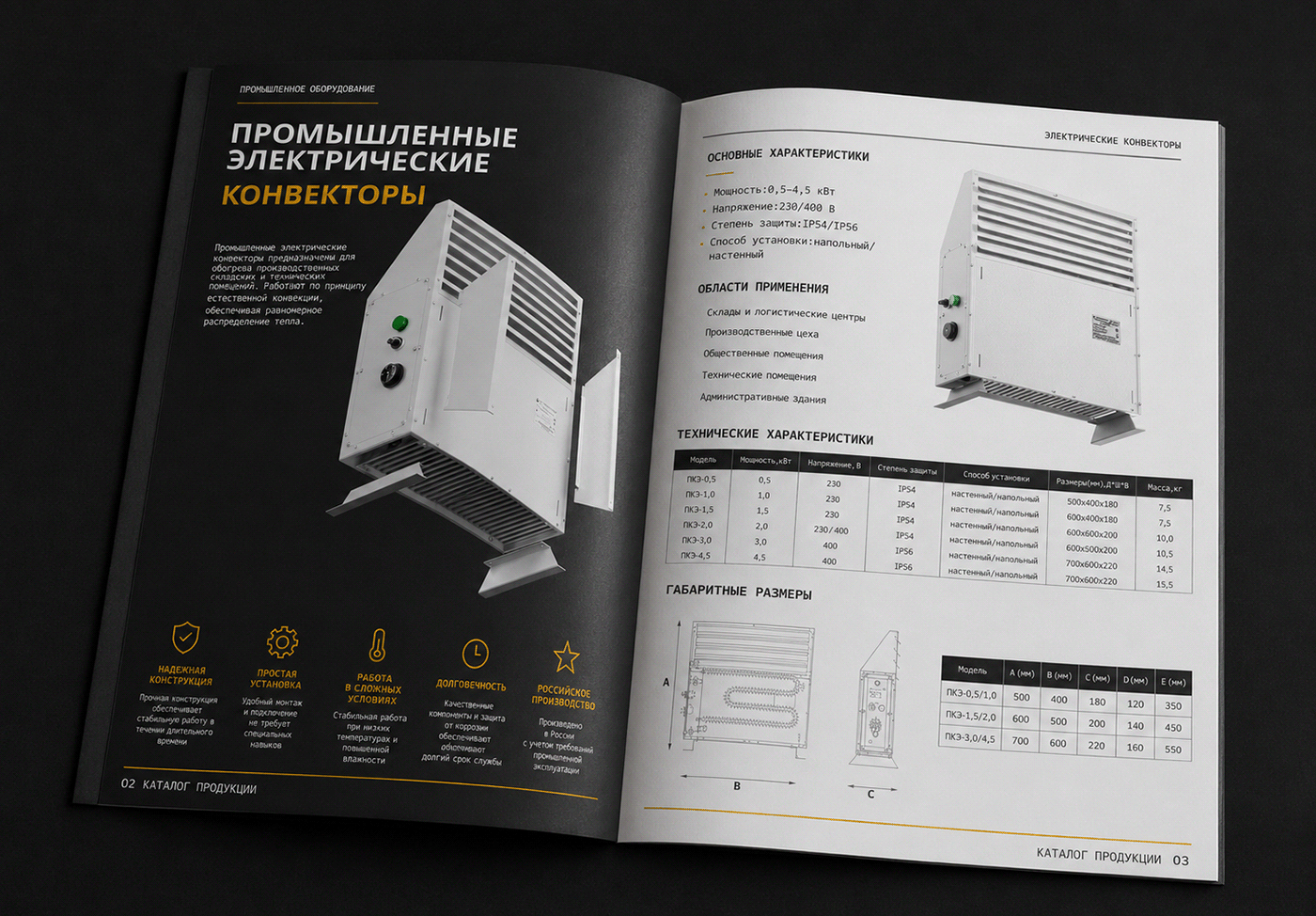
We developed a print-ready product catalog for a manufacturer of industrial electric air heaters and convectors. The publication combines photorealistic 3D equipment visualization, technical specifications, dimensional drawings and application data in one consistent system. Every convector model was recreated in 3D, giving the complete product range a unified angle, scale and image quality.
The same 3D assets were adapted for the company website and interactive 360° equipment viewers. Customers can examine the housing, heating elements, controls and available configurations, while the manufacturer receives one coordinated set of visuals for the printed catalog, online presentations, sales materials and exhibition displays.
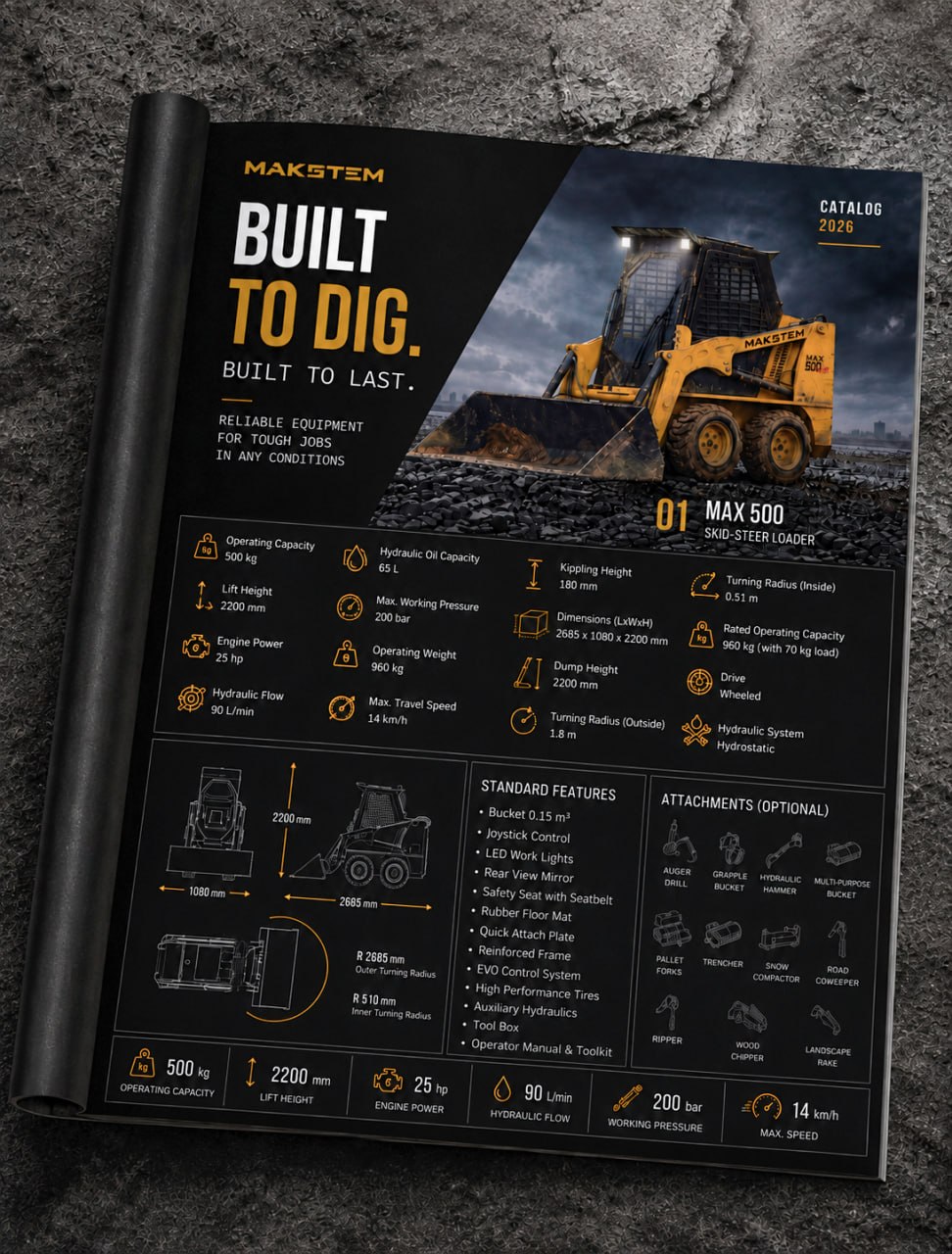
A complete 3D visualization system was created for a series of compact loaders, including the machines, attachments and internal assemblies. The frame, cab, engine, hydraulic system, hoses, cylinders, lifting mechanisms and working equipment were modeled in detail. This makes it possible to present not only the exterior design, but also the engineering structure and operating principles of each loader.
The models became the basis for technical 3D explanatory videos demonstrating the hydraulic system and moving mechanisms, as well as product advertising videos for the website and industry exhibitions. The resulting visual content is also used in the printed loader catalog, commercial proposals, training materials and digital product pages.
Production workflow
A structured workflow keeps engineering accuracy, visual quality and print requirements under control from the first product table to the final files.
Product groups, navigation, page hierarchy and comparison logic.
Specifications, drawings, options, applications and source material are checked and organized.
Consistent product renders, detail views, cutaways and configuration images are produced.
Typography, grids, tables and visual hierarchy turn complex information into clear pages.
Print-ready files, screen PDFs and reusable image packages are prepared for every channel.
What you receive
The next step after the catalog
A well-structured catalog organizes the product range and explains the differences. The same logic and visual assets can then become an interactive product selection experience—without rebuilding the content from scratch.
Models, specifications, options and visual hierarchy are organized into one clear product language.
Colors, attachments and configurations become visible instead of remaining as names in a specification table.
The buyer assembles a suitable version, understands the result and can send a precise configuration to sales.
See how a catalog product can continue as an interactive sales tool.
VIEW CONFIGURATOR↗FAQ
We can work from CAD and STEP files, drawings, specifications, existing photos, brand guidelines and product tables. Missing visuals can be recreated with 3D modeling.
Yes. The layout system is prepared for print-ready PDF, screen PDF, website product pages, presentations and sales materials.
Yes. One reusable 3D product base can generate consistent hero images, detail views, cutaways, configuration variants, animation frames and interactive 360° content.
We use shared camera angles, lighting, scale, materials, page templates and specification rules so every model is easy to compare.
Need an industrial product catalog that works beyond print?
START A CATALOG PROJECTPersonal review and estimate
We will review your website and current materials, provide specific recommendations, propose solution options and calculate the cost.