Furniture tailored to your space
Tables, shelving, cabinets and storage systems shaped around their purpose, proportions and available space.

ND PRODUCT LAB / Bespoke design
I design furniture and bespoke structures around your dimensions, space and needs. I help turn an idea into a considered form, a 3D model and a clear project presentation.
Discuss your projectTables, shelving, cabinets and storage systems shaped around their purpose, proportions and available space.
Stands, supports, display elements and other custom pieces when an off-the-shelf solution does not fit.
Form exploration, material and finish options, a 3D model and images for discussion and approval.
Furniture with integrated features
We design desks with everyday comfort in mind, not just shape and dimensions. For work, creative projects, workshops or a home office — with the features you need and no unnecessary details.
Custom dimensions, desktop shape, height and support placement.
Integrated USB-A and USB-C, power sockets and wireless charging with compatible modules.
Lift mechanisms for seated and standing work, with conveniently positioned controls.
Cable channels, outlets and power-supply mounts with maintenance access.
Drawers, pull-out shelves, lighting and mounts for your equipment.
Before production, we develop the model and drawings, component layout and mechanism movement. We check travel, clearances and cable slack during lifting so parts do not interfere.
Discuss my deskA space for your profession
We design workspaces around your procedures, equipment and room dimensions, considering tool placement, storage, power connections and comfort for both professional and client.
Integrated extraction, lighting, sockets and USB, supply drawers and practical lamp placement.
Chairs based on existing lift and swivel mechanisms, stations with mirrors, tool holders and concealed equipment connections.
Tables with mirrors and lighting, adjustable seating, organizers and mobile cabinets.
Workstations, carts and adjustable supports designed for equipment access and convenient cleaning.
Precision-work benches with task lighting, optics mounts and small-parts storage.
Work surfaces organized for test equipment, tools, power supplies and extraction equipment.
More than furniture: a workspace shaped around your process. We agree heights, reach zones and materials, allow for cleaning and maintenance, prepare models and drawings, and check equipment layout and moving parts before production.
Design my workspaceAn engineering approach
Furniture, mechanisms and equipment can work as one system, tailored to your space, routines and needs.
My specialty is Electric Power Stations, Networks and Systems. My engineering background connects structural design with electrical development: sensors, actuators, lighting, control and device coordination over Wi-Fi.
Drive control, position sensors, status monitoring and opening routines.
Height adjustment, integrated power, controllable lighting and convenient controls.
Extraction and lighting activation, temperature monitoring and sensor notifications.
Pull-out modules, lifting elements and concealed mechanisms with coordinated operating logic.
We start with the task, not a collection of electronics: what should happen automatically, what you want to control and what information you need. We select components and plan wiring, sensor placement and maintenance access, including manual control and behavior if communication or power is lost.
Structure, electrical systems and control logic are designed together for a cohesive, easy-to-use solution.
Discuss a bespoke solution01 / Model analysis
For products with heat-generating components, form and heat dissipation go together. The heat-sink model connects fin geometry with temperature distribution to identify areas worth refining.
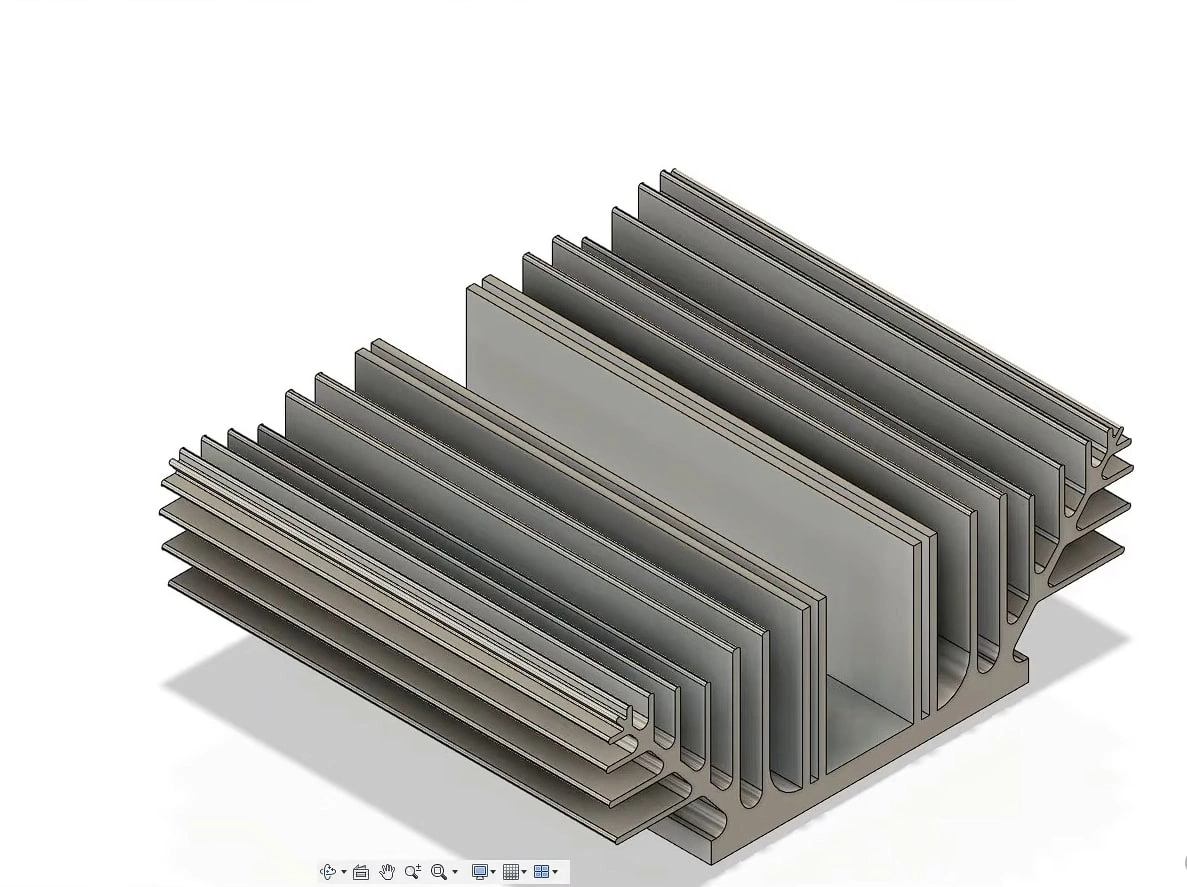
The fins and base form the heat-transfer surface. We start with the model geometry.
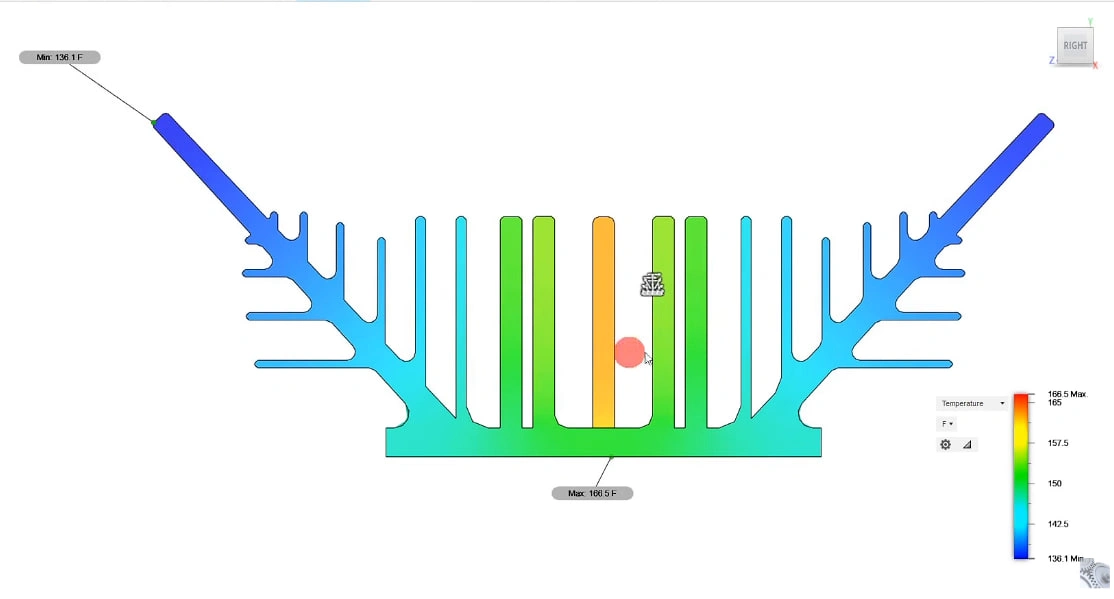
The color map shows warmer and cooler regions under the specified calculation conditions.
02 / Model analysis
The stool shows the path from material selection to a computer-based check. Beyond appearance, we examine how the seat, legs and connections work together. We define material properties, supports and loads, then examine model displacements.
We develop dimensioned drawings and details for the agreed manufacturing scope. For products with moving parts, we check travel, clearances, relative positions and possible collisions in the model. This helps detect errors before production, reduce the risk of defects and simplify assembly.
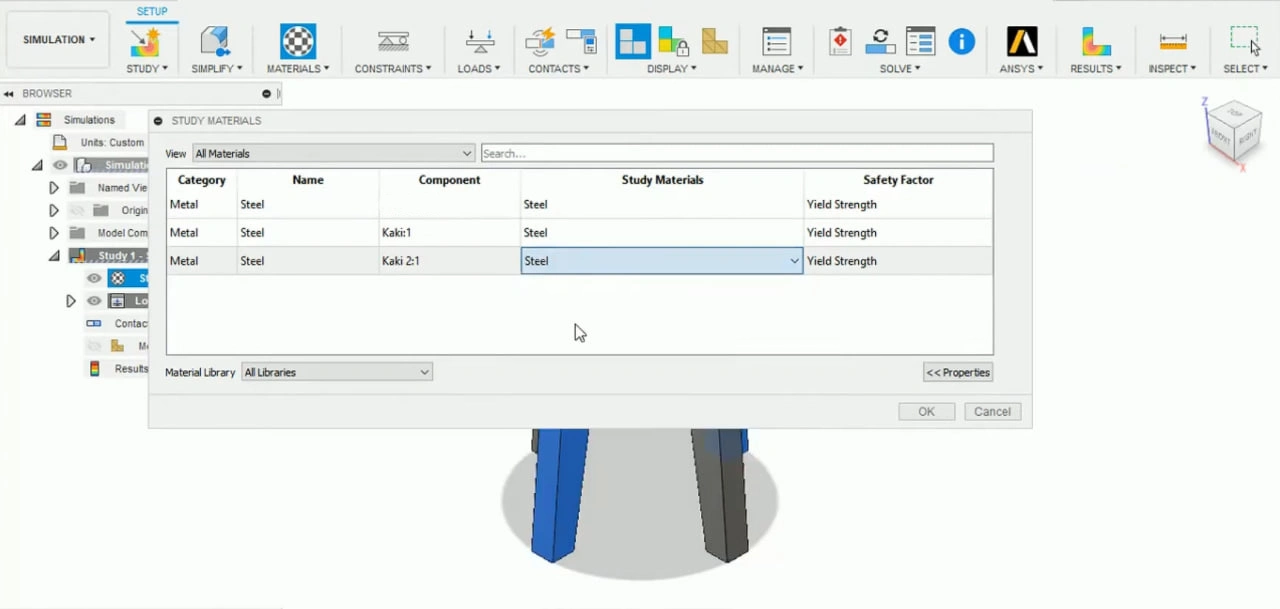
Assign a material to each component and consider its mechanical properties. Steel is selected for the model components shown here.
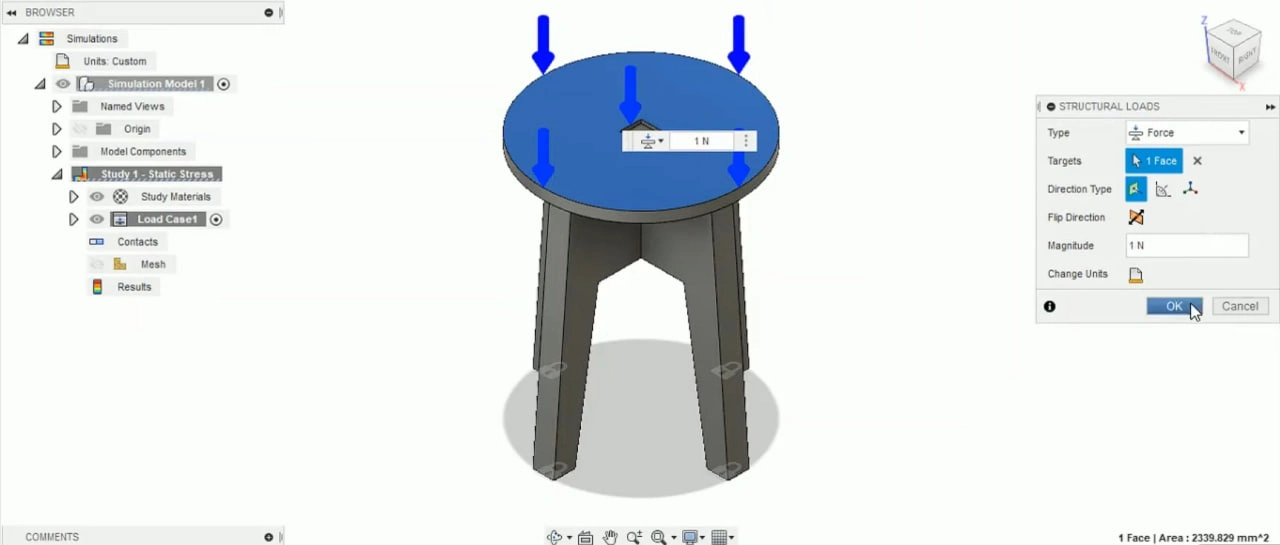
Define where the force acts and its direction. Loads, supports and intended use are agreed for the specific product.
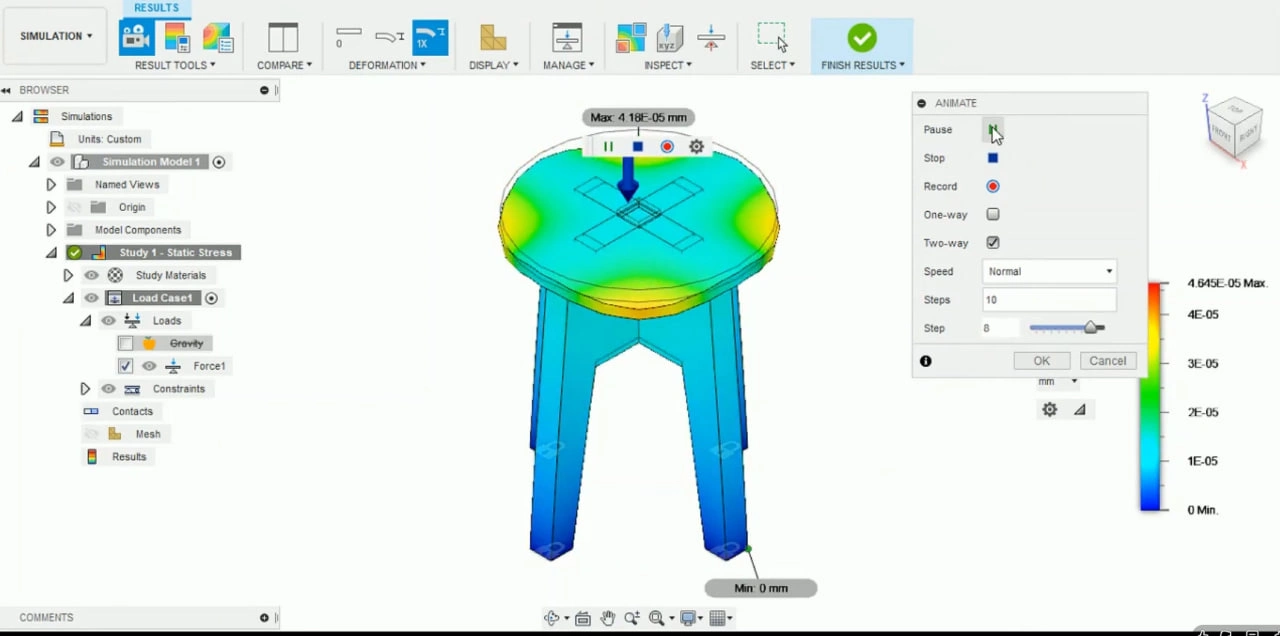
Examine displacements in the seat and legs. Results help decide whether to revise sections, connections or material and repeat the calculation.
Lower risk of defects — fewer revisions after production. Material selection and load analysis help identify weak points in the model, reduce material waste and limit the cost of correcting manufactured parts.
03 / Model analysis
Frames, supports and load-bearing elements can use different profile shapes. Comparing them with comparable materials, loads and supports helps select a design for its purpose, not appearance alone.
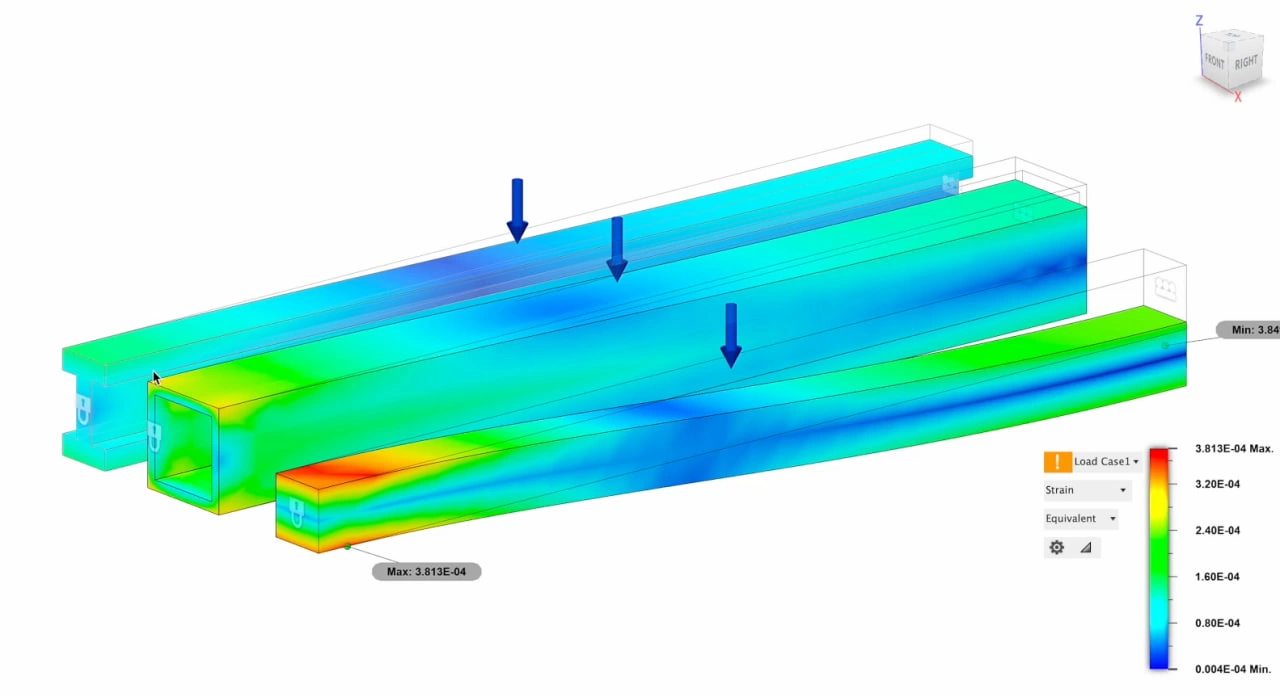
The equivalent-strain map helps reveal differences in how the profiles respond to loading.
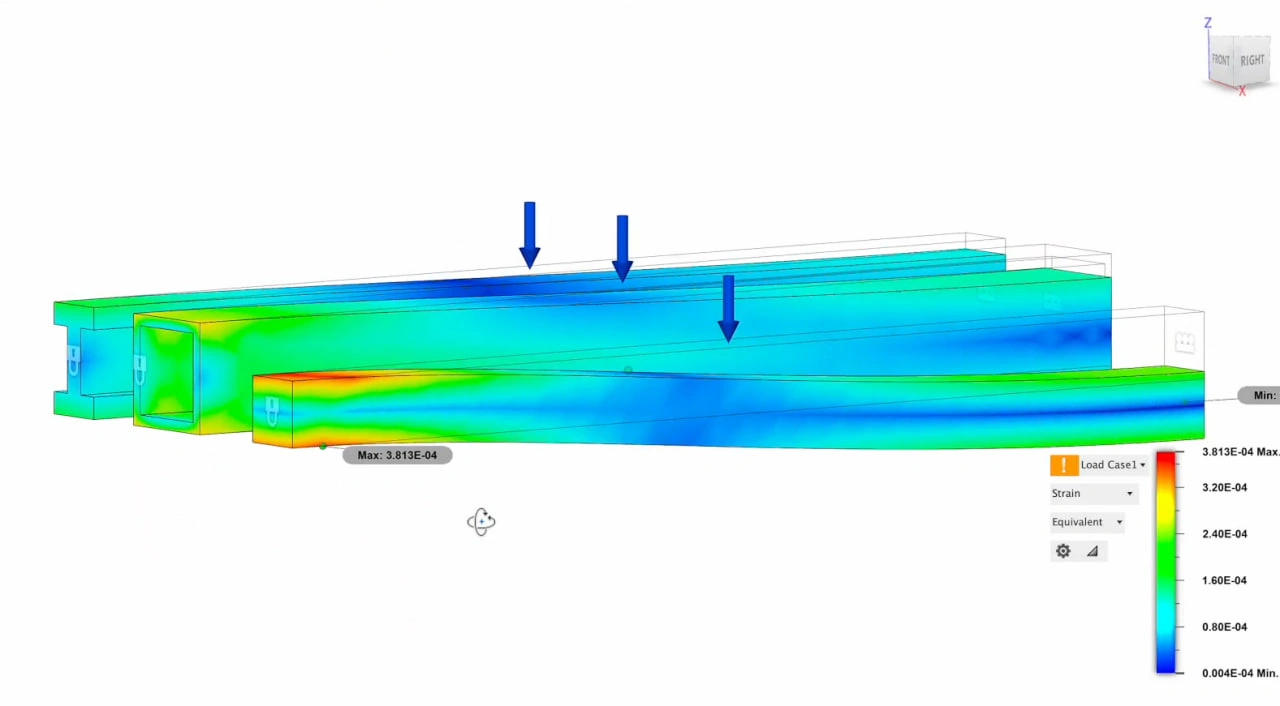
An additional view reveals the strain distribution along the elements and near the supports.
04 / Model analysis
Even a small support affects the assembly. The bracket example explores the load path, deflection and strain near reinforcing ribs to identify geometry that needs attention.
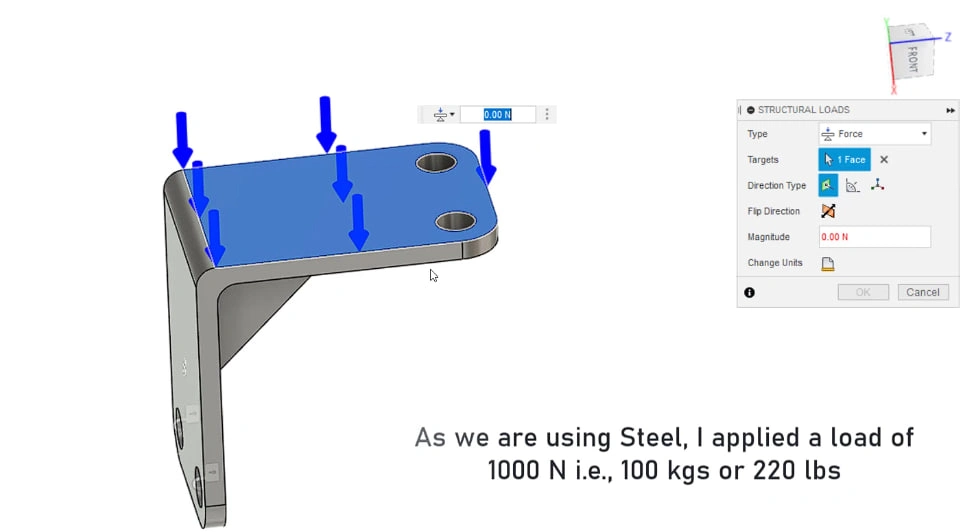
Select the loaded surface, force direction and magnitude in the calculation model.
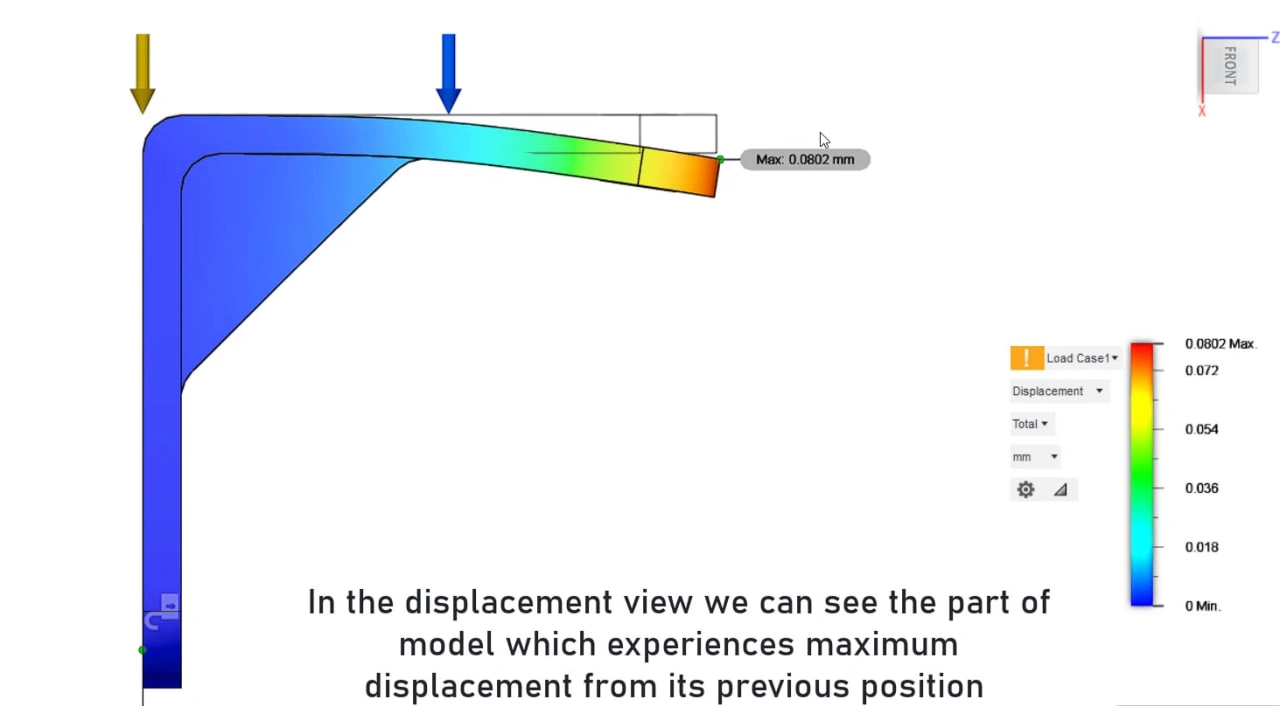
The side view shows bracket displacements and the location of the largest displacement.
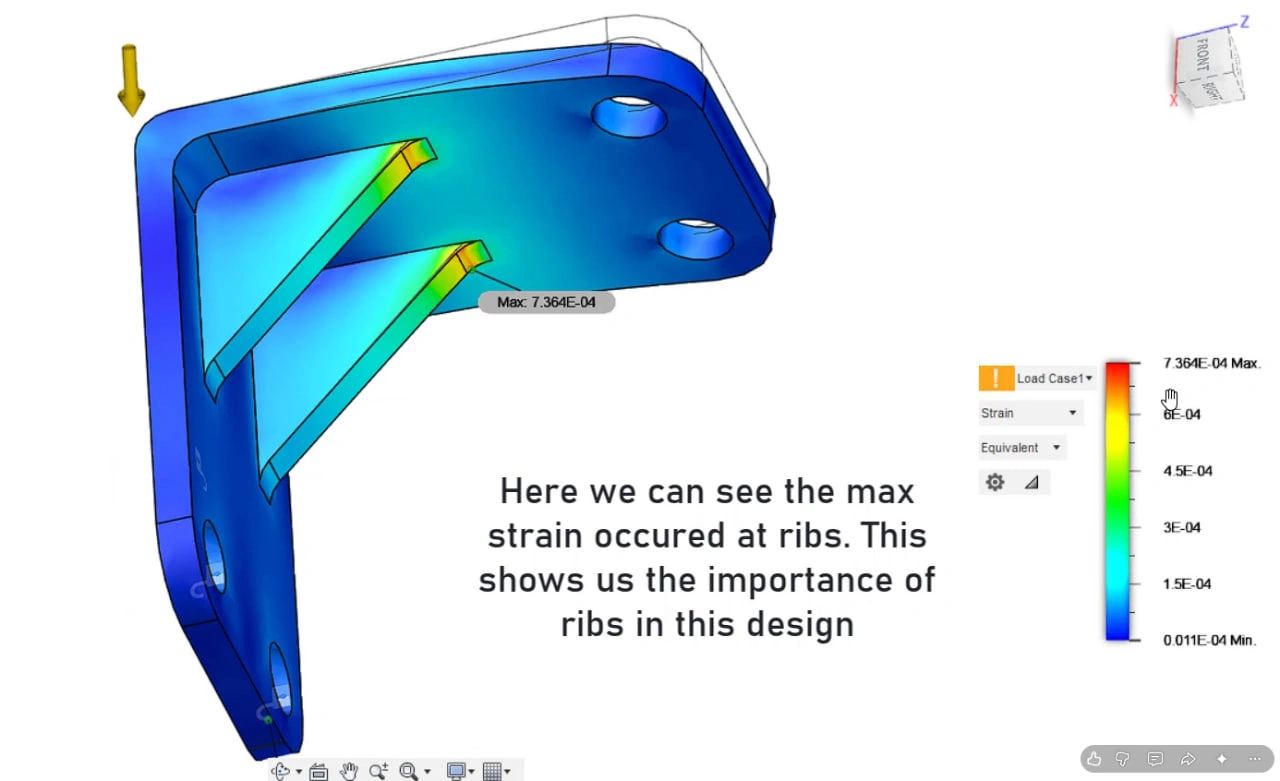
The equivalent-strain map highlights regions near the ribs worth examining during refinement.
05 / Model analysis
Different products call for different checks: static loading, heat, vibration or buckling. First, we define the question, available inputs and results needed for the next design step. The analysis scope is agreed separately.
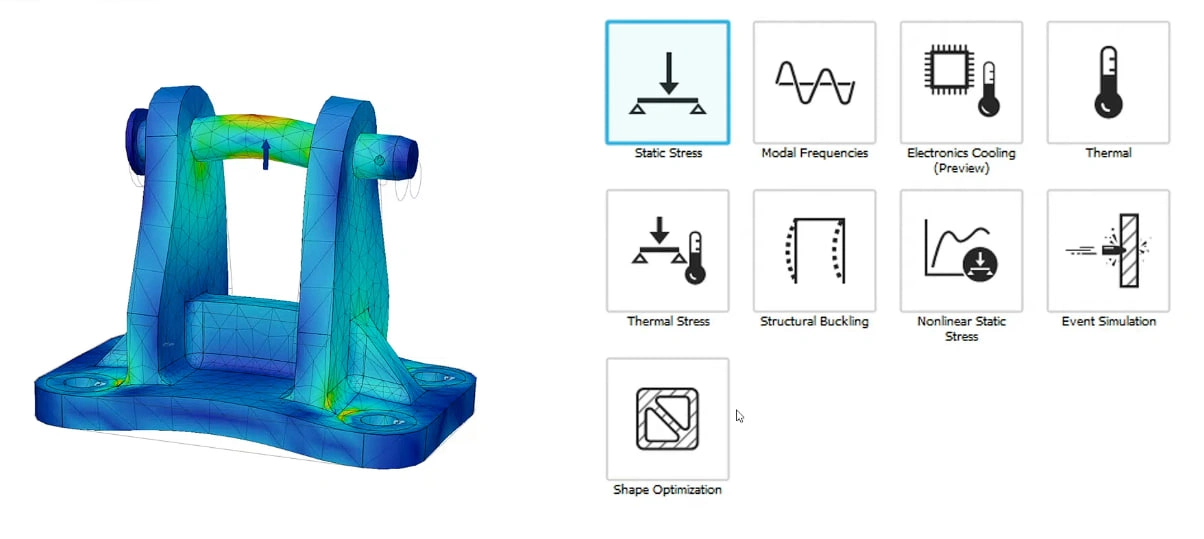
The mesh divides the geometry into calculation elements. The analysis type follows operating conditions; not every project needs every check.
Send a sketch or references, key dimensions, photos of the installation space and a description of how the item will be used. If you only have an idea, we can start with a conversation. Pricing and timing are agreed after reviewing the scope.
We develop the design, 3D model and drawings. Material selection, analysis and mechanism-motion checks form part of the agreed project scope. Drawing detail, required calculations and delivery formats are defined before work starts. Manufacturing is discussed separately.
Personal review and estimate
We will review your website and current materials, provide specific recommendations, propose solution options and calculate the cost.