
A practical guide for machinery manufacturers
AI or 3D: what makes sense for a manufacturer?
One campaign image and a year of product communication are different tasks. This guide explains when AI is enough, when a reusable 3D model becomes valuable, and when an in-house specialist or an external partner makes sense.
Explore the comparisonNot a battle of tools. A choice of workflow.
- 01
- One image
- 02
- A product library
- 03
- A year of content
The short answer
Choose for the task, not the trend
Ideas and one-off visuals
When speed matters more than exact product geometry.
Consistency and repeat use
When the same product must appear across views, versions and formats.
A combined workflow
A controlled product model, supported by AI for suitable creative tasks.
01 /
When AI can be the economical choice
For a one-off concept, a social post or an advertising background, image generation can reduce the initial effort. If exact product geometry is not essential, a dedicated 3D production pipeline may be unnecessary. The real cost still includes selection, editing, checks and usage rights.
- Advertising ideas and moodboards
- Backgrounds and environments
- Social content where exact product details are not critical
- Testing several visual directions before production
02 /
What changes when content is needed every week?
Imagine a crane manufacturer. Today it needs an image of a new model; next week the same crane with a different boom. Then come a new cab, chassis, outriggers and color. Marketing needs a catalog, an exhibition banner and a video; dealers need their own image set.
Now the task is not just to create an attractive image. It is to keep the same real product consistent across views, versions and formats. A maintained 3D scene stores its geometry, materials, cameras and configuration.
03 /
An image and a reusable product model are different assets
In image-generation workflows, the deliverable is usually an image. In a 3D workflow, a controllable product model can support many deliverables. This is not a claim that all AI tools work the same way: reference images, guided editing and specialized 3D tools also exist.
A 3D model is not automatically accurate. Its quality depends on source materials, preparation and engineering review. A marketing model is also not a certified engineering digital twin.
04 /
One product — many kinds of content
A prepared model becomes a shared starting point. Each output still needs its own setup; an animation needs rigging, while an interactive viewer needs optimization and development. Reuse saves duplicated preparation, not all subsequent work.
- Advertising renders and standard website views
- Transparent-background images and close-ups
- Catalogs, dealer materials, exhibitions and presentations
- Exploded views, cutaways and technical illustrations
- Mechanism animations and promotional videos
- 360° viewers, configurators and equipment variants
Website · Catalog · Advertising · Video · 360° · Configurator
05 /
Update the part, keep the production setup
Two months later, the manufacturer changes the wheels, cab or counterweight. In a structured 3D project, I replace or modify the relevant parts and reuse suitable cameras, materials and environments. Some changes still require new framing, lighting or animation checks.
AI workflows can also reuse references and edit existing images. The practical question is how reliably the chosen process preserves the exact product across every required view, and how much manual checking it takes.
06 /
Compare a year of content, not the first image
The initial 3D asset often requires more preparation than a simple generated image. Its value becomes clearer when the brief includes recurring updates and many deliverables. For example, a plan for 30–50 images, several models, videos and dealer materials is a different budget problem from one campaign visual. These figures are an example, not a break-even threshold.
- Initial modeling, CAD preparation or photography
- Specialist time, software and rendering resources
- Revisions, product checks and approval rounds
- Updates, new variants and adaptations to each channel
- Internal coordination, searching for images and managing suppliers
- Storage, documentation, source-file access and handover
For one image, consider AI. For a product range that needs consistent communication, build a reusable visual system.
07 /
What an in-house 3D specialist brings
The advantage is accumulated product knowledge, not simply access to rendering software. A specialist learns the product range, assemblies, engineering constraints, company colors and the expectations of marketing and sales. That context can reduce repeated briefing and help maintain a coherent library.
An internal role also has ongoing costs: compensation, equipment, software, management, training and cover during absence. A long-term external partner can retain similar product knowledge if source files, documentation and responsibilities are agreed.
08 /
Marketing does not always have to wait for a photoshoot
Shooting heavy machinery may require a finished machine, preparation, transport, a location, a photographer, suitable weather and retouching. If the product is not built yet, approved design data can make earlier 3D communication possible.
Photography remains valuable for verifying the real appearance, materials and current version. Rendered features must match the approved configuration, especially for products still in development.
09 /
Sales can show the configuration the customer needs
“Show this model with another boom, these wheels and our company color.” A physical example may not exist. With the relevant parts modeled, a 3D workflow can assemble and show the proposed configuration. Engineering still needs to confirm compatibility; a convincing image is not proof that a machine can be built that way.
10 /
The useful combination: controlled 3D plus AI
A 3D specialist does not need to compete with AI. I would keep the product in a controlled scene and use suitable AI tools for ideas, environments, concepts, image editing and advertising variations. The product details still need checking after any generative edit.
Before uploading confidential CAD or unreleased designs to an external service, agree the data policy and permissions with the company.
11 /
In-house specialist, contractor or AI?
For a few images a year, occasional product updates or simple social content, an internal full-time role may not be justified. AI can cover suitable concept tasks; an external specialist can handle work that needs product control.
An in-house role is worth evaluating when new machines, variants, catalogs, exhibitions, campaigns, videos, dealer requests and website updates create a stable workload. A retained external partner is another option when demand is regular but not enough for full-time employment.
12 /
How to make the decision using your own workload
There is no universal number of renders after which hiring pays for itself. Reuse, complexity, approval time and staff utilization determine the result.
- List the products, variants and channels you need to support this year.
- Define the required accuracy and who approves technical details.
- Count source preparation, revisions and internal coordination, not only final images.
- Compare in-house, external and hybrid budgets for the same deliverables.
- Run a pilot on one product and record real time, costs and reusable assets.
- Agree source-file ownership, access, documentation and future updates.
FAQ
Questions before choosing a workflow
Is AI always cheaper than 3D?
No. It depends on accuracy, revisions and output volume. Compare the full workflow for the same brief, not just generation time. For AI video, include unsuccessful attempts too: clips with distorted product details, incorrect movement or inconsistent appearance may be unusable. Depending on the service, repeated generations can consume paid credits, while reviewing results, adjusting prompts and editing take additional time. Assess the cost of an approved final video, including rejected attempts—not just the price of one generation.
Does a manufacturer need an in-house 3D artist?
Not necessarily. A permanent external partner can maintain a product library too. Hiring makes sense when workload and internal coordination justify the full employment cost.
Can one model support video and a configurator?
It can be a common source, but each format requires preparation: animation setup, optimization, interactions and implementation.
Can we start without CAD?
Yes, using photographs, dimensions and detailed references. Reconstructing the product adds modeling and research work; I explain this process in the RBF03 Ultra case study.
From comparison to your product
One product. A plan for all its communication.
Send me one machine and your content needs. I can outline which materials could be produced from a shared 3D asset and help you assess a project-based, ongoing or in-house workflow. Scope, pricing and any pilot work are agreed separately.
Examples in practice
From a 3D model to a working result
 01
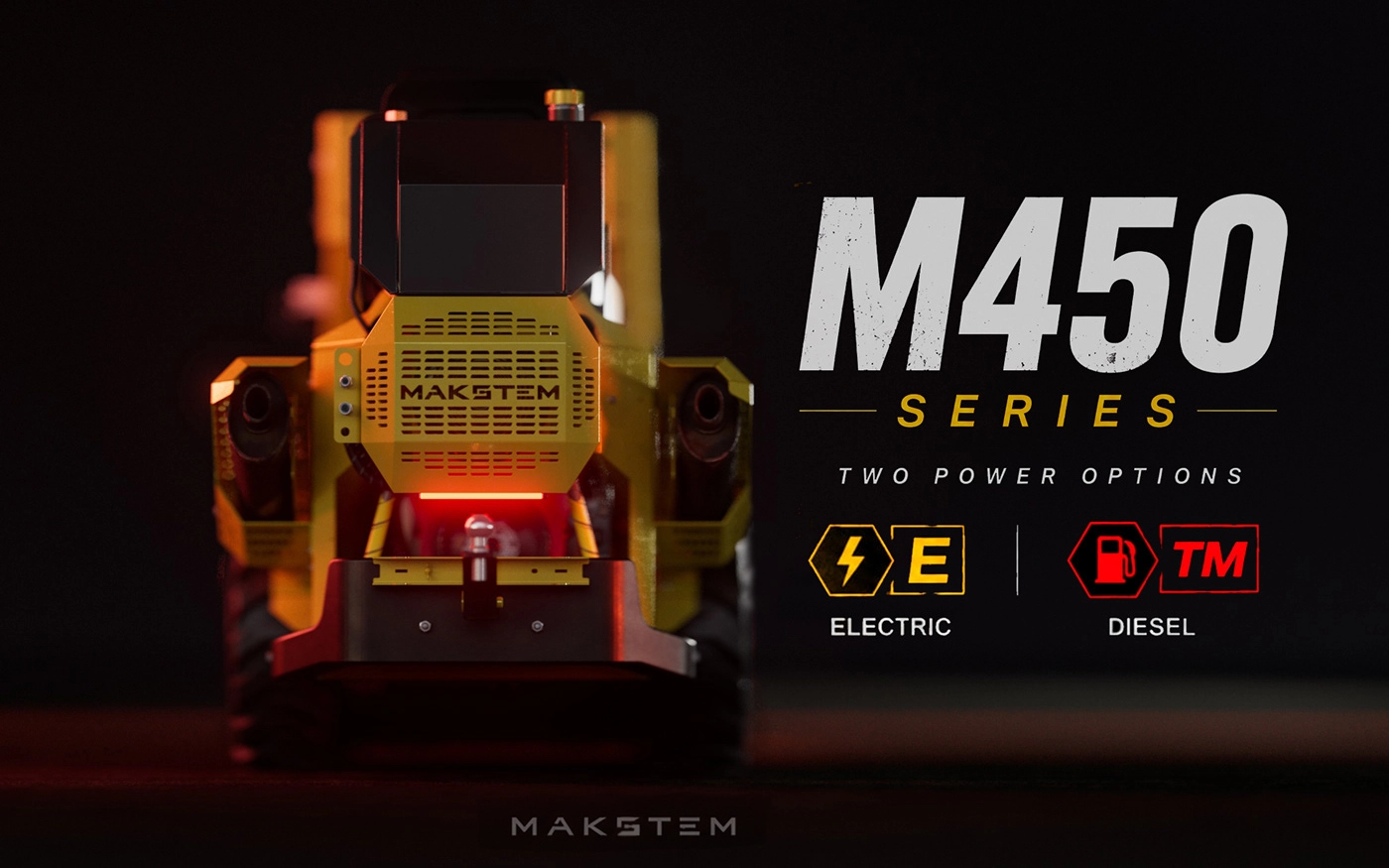
01MAKSTEM MAX 450
Detailed modeling and visualization of a tracked loader.
View project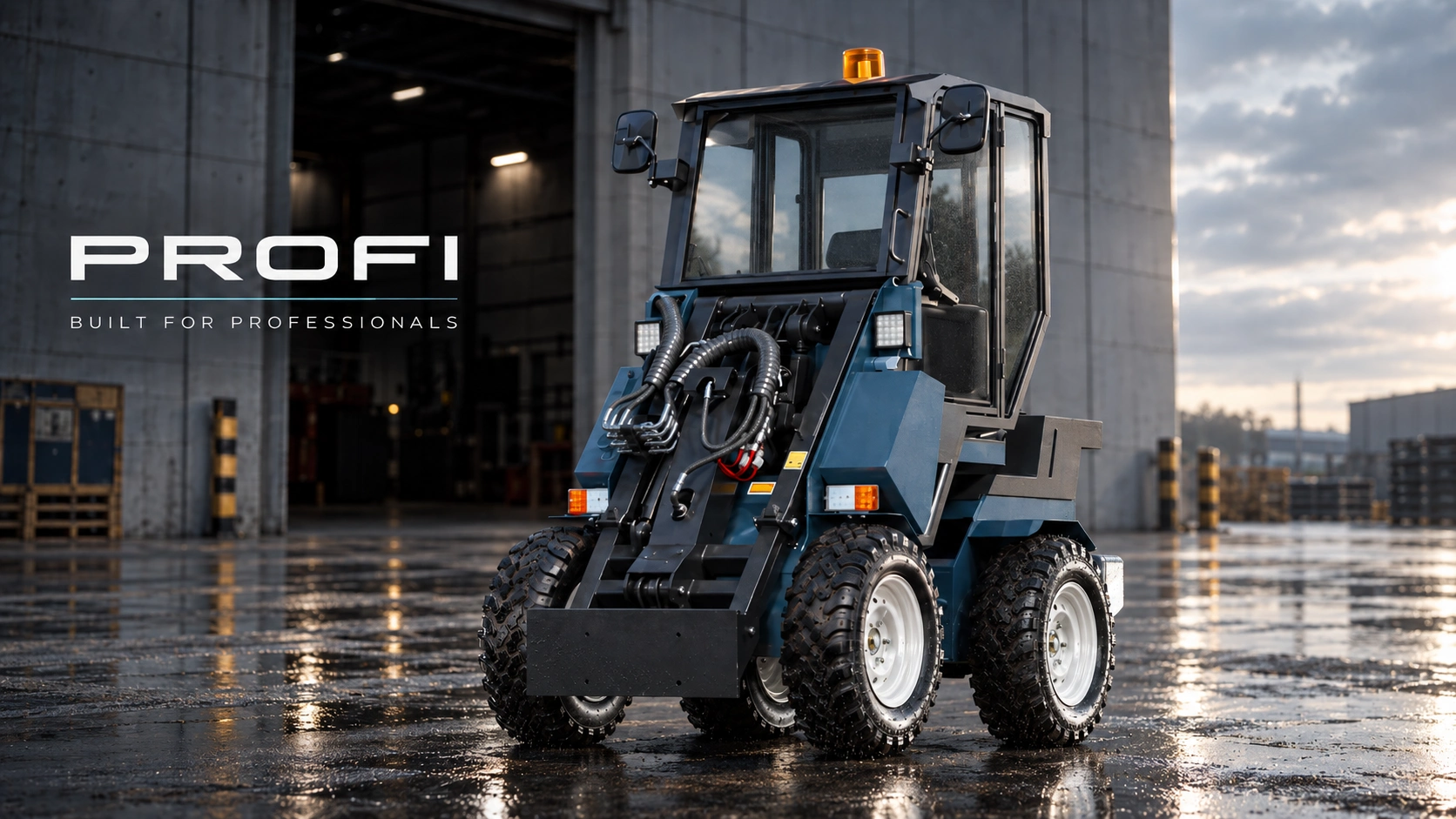 02
02PROFI
Product renders, technical views and close-up details.
View project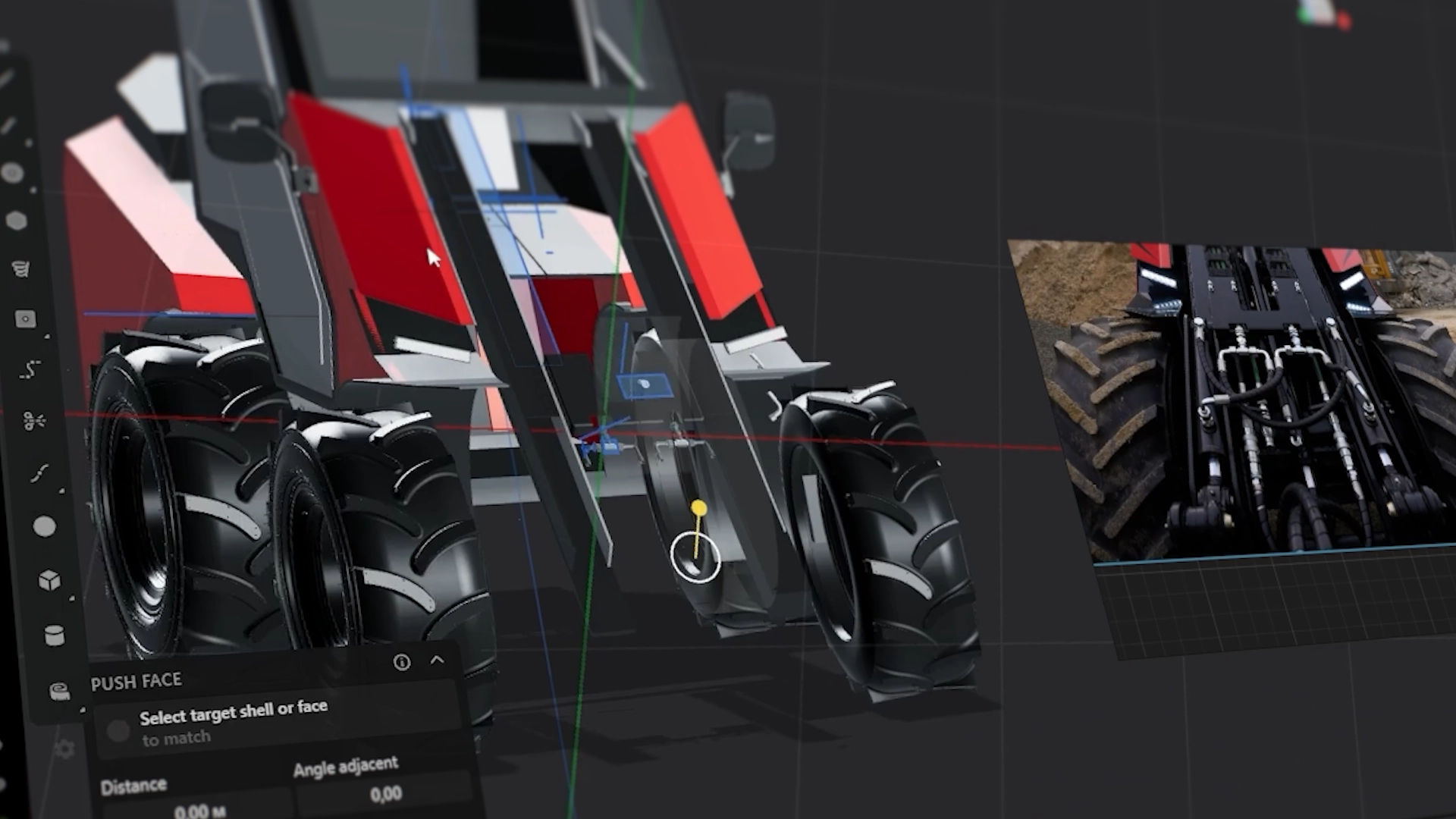 03
03RBF03 ULTRA
The complete workflow: from photographs to a detailed 3D model.
View project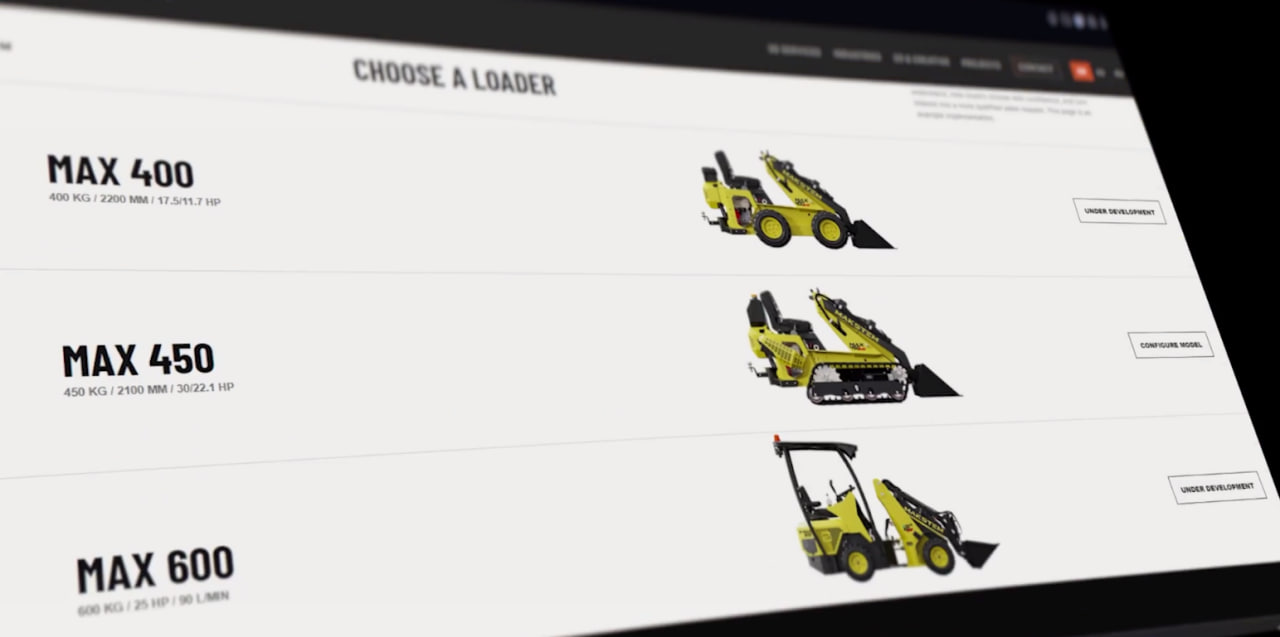 04
043D product configurator
Interactive product presentation and configuration selection.
About the configurator Explore the studio — go to homepage